Article · September 21, 2026
A Field Guide to Cider Apples
Sweets, sharps, bittersweets and bittersharps — what the old cidermakers' categories mean and how to use them when you're blending at home.
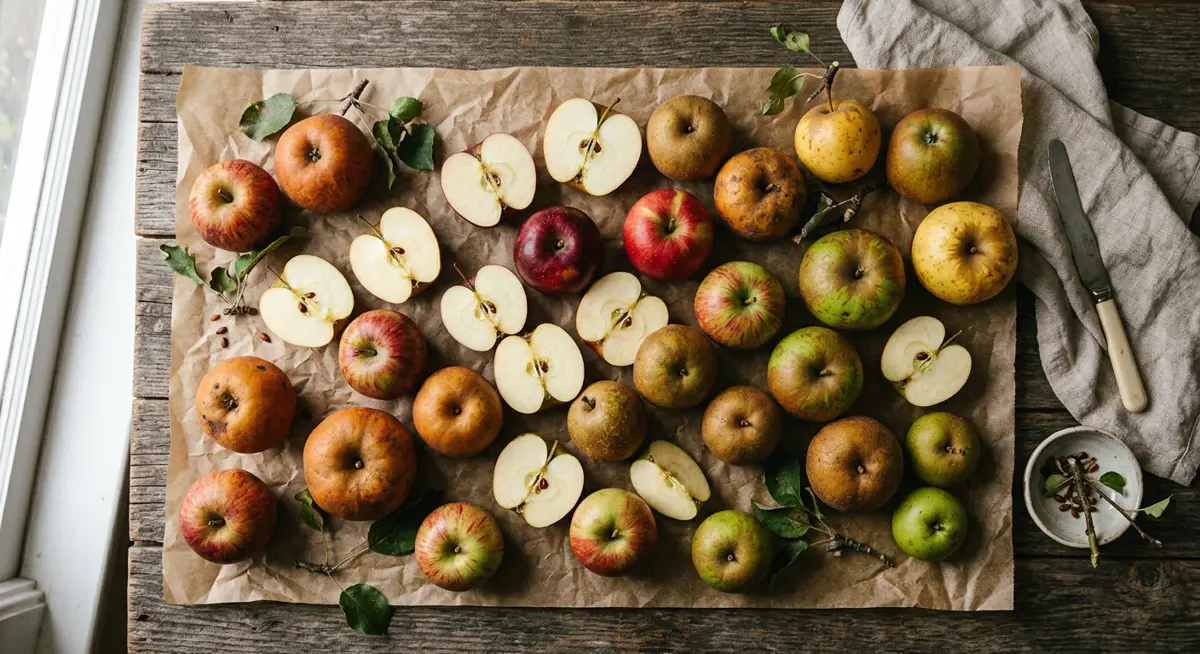
Walk into a traditional orchard and you'll find apples you would never want to eat out of hand. Some are so tannic they dry your mouth like strong tea; others are so sour they make you wince. To a cidermaker, those are the good ones.
The four families
Cider apples are traditionally sorted by two things: acidity and tannin.
- Sweets — low acid, low tannin. They bring sugar (and therefore alcohol) but little character on their own. Most dessert apples land here.
- Sharps — high acid, low tannin. Bright and zippy. Think Bramley or Granny Smith.
- Bittersweets — low acid, high tannin. The backbone of English and French farmhouse ciders, like Dabinett and Yarlington Mill.
- Bittersharps — high acid, high tannin. Rare and prized. Kingston Black is the famous example.
Blending at home
You probably can't get Kingston Black at the grocery store, but you can still blend for balance. A good starting ratio for supermarket juice-based cider:
- Two parts sweet apple juice for body and sugar.
- One part tart juice (Granny Smith, or a splash of crabapple if you can find it).
- A pinch of grape tannin or a cup of strong black tea for structure.
Taste as you go
Before you ferment, taste the blend. It should be a little too tart and a little too astringent — fermentation softens both, and the sweetness disappears as sugar becomes alcohol.